1. Introduction
This manual provides detailed instructions for the Waveshare Dust Sensor Detector Module, featuring the Sharp GP2Y1010AU0F sensor. This module is designed for accurate detection of fine particles, including those found in cigarette smoke, with a diameter larger than 0.8µm. It outputs an analog voltage directly proportional to the dust density, making it an essential component for various air quality monitoring and control systems.

Figure 1: Waveshare Dust Sensor Detector Module.
2. Principales caractéristiques
- Sharp GP2Y1010AU0F Onboard: Detects fine particles larger than 0.8µm in diameter, including cigarette smoke.
- Faible consommation d'énergie : Efficient operation for extended use.
- Volume analogiquetage Sortie : Provides an output level that is linear with dust density, simplifying data interpretation.
- Embedded Voltage Boost Circuit: Supports a wide range of power supply inputs (2.5V to 5.5V).
3. Spécifications techniques
| Paramètre | Valeur |
|---|---|
| Sensibilité | 0.5V/(100µg/m³) |
| Plage de mesure | 500 µg/m³ |
| Alimentation électrique | 2.5V ~ 5.5V |
| Courant de fonctionnement | 20mA (max) |
| Température de fonctionnement | -10℃ ~ 65℃ |
| Température de stockage | -20℃ ~ 80℃ |
| Durée de vie | 5 ans |
| Dimensions (L × l × H) | 63.2 mm × 41.3 mm × 21.1 mm |
| Taille du trou de montage | 2.0 mm |
| Air Hole Size | 9.0 mm |
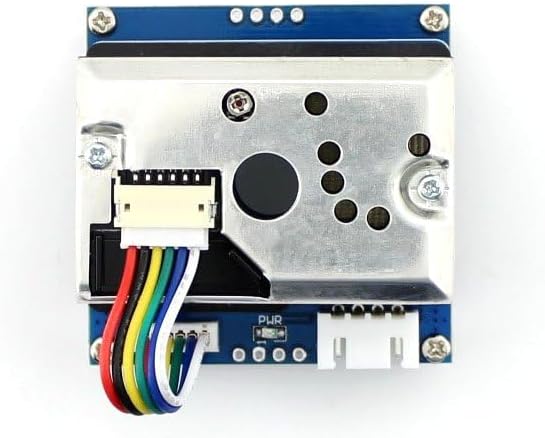
Figure 2 : Plusview diagram showing key specifications and connection details.
4. Contenu du colis
The Waveshare Dust Sensor Detector Module package typically includes:
- 1x Waveshare Dust Sensor Detector Module (with Sharp GP2Y1010AU0F)
- 1x 6-pin connection cable

Figure 3: Included 6-pin connection cable.
5. Configuration et connexion
To integrate the Waveshare Dust Sensor Detector Module with a microcontroller unit (MCU), follow these connection guidelines:
- CCV: Connect to the power supply of your MCU. The module supports a voltage range of 2.5V to 5.5V. Ensure your power supply is within this range to prevent damage.
- GND : Connect to the ground (GND) of your MCU.
- AOUT: Connect to an analog input pin on your MCU. This pin provides the analog voltage output, which is proportional to the dust density.
- ILED: Connect to a digital I/O pin on your MCU. This pin is used to drive the internal infrared LED of the sensor. Refer to the sensor's datasheet or Waveshare's documentation for specific timing requirements for pulsing this pin to take readings.

Figure 4: Dust Sensor Module with connection cable.

Figure 5 : Example connection of the Dust Sensor Module to an Arduino expansion shield.

Figure 6: Pinout diagram on the bottom of the module for reference.
6. Principes de fonctionnement
The Sharp GP2Y1010AU0F sensor operates by detecting scattered light from dust particles. An infrared emitting diode (ILED) periodically pulses light into a detection area. If dust particles are present, they scatter this light, which is then detected by a phototransistor. The amount of scattered light is converted into an analog voltage output (AOUT).
Le volume de sortietage is directly proportional to the concentration of dust in the air. Higher dust concentrations result in a higher analog output voltage. To obtain accurate readings, it is crucial to pulse the ILED pin according to the sensor's specifications (e.g., a 0.32ms pulse width within a 10ms cycle, with sampling at 0.28ms into the pulse).
7. Entretien
To ensure optimal performance and longevity of your dust sensor module, consider the following maintenance tips:
- Garder propre: Periodically inspect the sensor's air intake and optical path for dust accumulation. Gently blow dust away using compressed air. Avoid using liquids or abrasive materials.
- Avoid Physical Contact: Do not touch the internal components of the sensor, especially the optical elements.
- Aucun ajustement : The potentiometer on the module is factory-calibrated. Do not attempt to adjust it, as this can negatively impact sensor accuracy.
8. Dépannage
If you encounter issues with your Waveshare Dust Sensor Detector Module, refer to the following common problems and solutions:
- No Output or Erratic Readings:
- Verify all connections (VCC, GND, AOUT, ILED) are secure and correctly wired to your MCU.
- Assurer l'alimentation voltage is within the specified range of 2.5V to 5.5V. Supplying higher voltages can damage the module.
- Check your microcontroller code for correct timing and analog reading procedures for the ILED and AOUT pins. Refer to Waveshare's official documentation for example code.
- Inconsistent or Fluctuating Readings:
- Ensure the sensor is placed in an area with stable airflow, free from direct drafts or stagnant air pockets. Consider adding a small fan to ensure consistent air sampling if needed.
- Environmental factors such as humidity and temperature can influence readings. Ensure the operating environment is within the specified temperature range.
- Module Not Powering On / Damaged:
- Reconfirm that the input voltage does not exceed 5.5V. Overvoltage is a common cause of damage.
- Inspect the module for any visible physical damage or loose solder joints.
9. Garantie et assistance
For technical support, additional documentation, and software examples, please visit the official Waveshare website. Information regarding product warranty and return policies can typically be found on the product page where the item was purchased or on the Waveshare support portal.


