1. Introduction
Thank you for choosing the Gzunelic 9500 Lumens Android WiFi Projector. This projector is designed for home entertainment, offering a bright, high-definition viewing experience with versatile connectivity options. Featuring a native 1080p resolution, Android operating system, and wireless mirroring capabilities, it provides a comprehensive solution for your multimedia needs. This manual will guide you through the setup, operation, and maintenance of your new projector.
2. Consignes de sécurité
- Assurez une ventilation adéquate autour du projecteur afin d'éviter toute surchauffe. Ne bloquez pas les ouvertures de ventilation.
- Utilisez uniquement l'adaptateur secteur fourni avec le projecteur.
- Évitez de regarder directement dans l'objectif du projecteur lorsque le lamp est allumée, car la lumière vive peut endommager les yeux.
- Ne placez pas le projecteur sur des surfaces instables.
- Tenez le projecteur éloigné de l'eau ou de tout autre liquide.
- Débranchez le projecteur en cas d'orage ou lorsqu'il n'est pas utilisé pendant une période prolongée.
- N’essayez pas de réparer le projecteur vous-même. Confiez toute réparation à un personnel qualifié.
3. Contenu de la boîte
- Gzunelic 9500 Lumens Android WiFi Projector
- Câble d'alimentation
- Télécommande
- Câble HDMI
- Câble VGA
- Manuel de l'utilisateur (ce document)
4. Produit terminéview
4.1 Composants physiques

Figure 4.1 : Devant view of the Gzunelic Projector, highlighting the lens and ventilation.

Figure 4.2 : Divers views of the projector, including top, front, left, right, and back, showing its compact design.
The Gzunelic projector features a sleek design with a prominent lens at the front. It includes a robust cooling system with ventilation grilles on the sides and back to ensure stable operation.
4.2 Panneau de contrôle

Figure 4.3 : Top-mounted control panel with navigation and function buttons.
The control panel is located on the top of the projector, providing easy access to essential functions. It includes directional buttons for navigation, an OK button for selection, a power button, and menu/return buttons.
4.3 Ports d'entrée/sortie

Figure 4.4 : Arrière view showing the comprehensive array of input and output ports.
The projector offers a wide range of connectivity options on its rear panel, including:
- Port VGA : Pour la connexion à des ordinateurs ou ordinateurs portables plus anciens.
- 2 x USB Ports: For connecting USB drives, external hard drives, mouse, or keyboard.
- 2 ports HDMI : For connecting modern devices like PCs, laptops, set-top boxes, gaming consoles (PS3/PS4/Xbox), and DVD players.
- Port Ethernet: Pour connexion Internet filaire.
- Port AV : For connecting older video sources.
- Port audio 3.5 mm : Pour connecter des écouteurs ou des haut-parleurs externes.
The projector also supports Wi-Fi for direct signal connection and Bluetooth for wireless audio output.
4.4 Réglage de la hauteur

Figure 4.5 : Adjustable foot for precise height and projection angle alignment.
An adjustable foot is located on the underside of the projector, allowing you to fine-tune the projection angle and height for optimal image alignment on your screen or wall.
5. Installation
- Placement: Position the projector on a stable, flat surface. Ensure there is adequate space around the projector for ventilation. For ceiling mounting, use the four holes on the bottom of the unit.
- Connexion électrique : Branchez le câble d'alimentation à l'entrée d'alimentation du projecteur, puis à une prise de courant.
- Mise sous tension : Appuyez sur le bouton d'alimentation du projecteur ou de la télécommande pour allumer l'appareil.
- Ajuster la hauteur : Use the adjustable foot at the front of the projector to raise or lower the front of the unit, aligning the projected image with your screen.
- Réglage de la mise au point : Tournez la bague de mise au point autour de l'objectif jusqu'à ce que l'image projetée apparaisse nette et claire.
- Correction trapézoïdale : Adjust the keystone correction dial (if available) to correct any trapezoidal distortion in the image, ensuring a rectangular projection.
6. Mode d'emploi
6.1 Fonctionnement de base
- Marche/Arrêt : Press the power button once to turn on. Press and hold the power button for a few seconds to initiate shutdown.
- Navigation: Use the directional buttons on the control panel or remote to navigate through menus. Press 'OK' to select.
- Sélection de la source : From the main menu, select "Signal Source" to choose your input (HDMI, VGA, AV, etc.).
6.2 Connexion d'appareils
Le projecteur prend en charge diverses connexions filaires et sans fil :
- HDMI/VGA/AV : Connect your PC, laptop, gaming console, or DVD player using the respective cables to the corresponding ports on the projector.
- USB: Insert a USB flash drive or external hard disk into a USB port to play media files directly. You can also connect a USB mouse or keyboard for easier navigation within the Android OS.
- Ethernet : Connect an Ethernet cable to the port for a stable wired internet connection.
- Wifi: Navigate to the projector's settings menu to connect to your wireless network.
- Bluetooth : To connect a Bluetooth speaker, go to the settings menu, enable Bluetooth, and pair with your speaker. If using a wired external speaker, connect it via the 3.5mm audio port and set the sound output to "line out" in the Android settings.
6.3 Android OS and Wireless Mirroring
Figure 6.1 : The Android OS home screen displaying available applications.
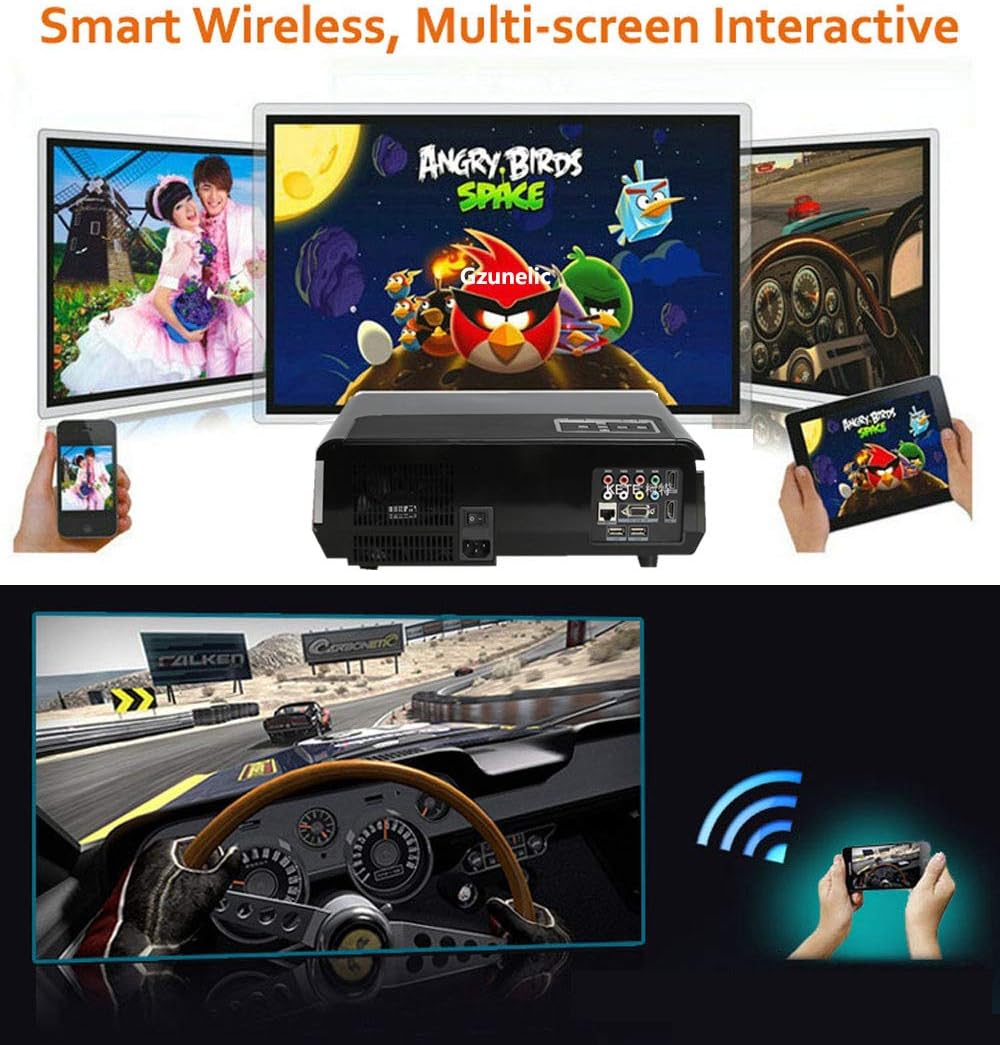
Figure 6.2 : Illustration of wireless mirroring from smartphones and tablets to the projector.
The projector runs on an Android operating system, allowing direct access to online content, shopping, and games. You can navigate using the remote control or by connecting a USB mouse/keyboard.
- Screen Mirroring (Airplay/Miracast): On the projector's Android home page, locate and click the "Screening Assistant" app. Follow the on-screen instructions to connect your phone via Airplay (for iOS devices) or Miracast (for Android devices). Ensure both your phone and the projector are connected to the same Wi-Fi network.
- Applications préinstallées : Access apps like YouTube, Aptoide TV, and WPS Office directly from the home screen for various entertainment and productivity functions.
6.4 Vidéo de démonstration du produit
Vidéo 6.3: A brief demonstration video showcasing the Gzunelic projector in operation. This video provides a visual overview of the projector's capabilities and image quality.
7. Entretien
- Nettoyage de la lentille : Utilisez un chiffon doux non pelucheux, spécialement conçu pour les lentilles optiques, afin de nettoyer délicatement la lentille du projecteur. Évitez d'utiliser des produits nettoyants abrasifs ou des chiffons susceptibles de rayer la lentille.
- Nettoyage de l'extérieur : Essuyez l'extérieur du projecteur avec un chiffon doux et sec. Pour les saletés tenaces, utilisez un chiffon légèrement plus sec.amp Un chiffon peut être utilisé, mais veillez à ce qu'aucune humidité ne pénètre dans l'appareil.
- Ventilation: Regularly check and clean the ventilation openings to prevent dust buildup, which can impede airflow and cause overheating. Use a soft brush or compressed air to clear dust.
- Stockage: When not in use for extended periods, store the projector in a cool, dry place, ideally in its original packaging or a protective case, to prevent dust accumulation and physical damage.
8. Dépannage
| Problème | Cause possible | Solution |
|---|---|---|
| Aucune image projetée | Alimentation non connectée ; source d'entrée incorrecte ; appareil non allumé. | Check power cable and outlet; Select correct input source (HDMI, VGA, AV); Ensure connected device is on. |
| Image floue | Out of focus; Incorrect keystone adjustment; Projector too close/far from screen. | Adjust focus ring; Adjust keystone correction; Reposition projector for optimal distance. |
| Pas de son | Volume too low/muted; Incorrect audio output setting; External speaker not connected/paired. | Increase volume, unmute; Check audio settings (e.g., set to "line out" for wired external speakers); Ensure Bluetooth speaker is paired. |
| La duplication d'écran sans fil ne fonctionne pas | Not on same Wi-Fi network; "Screening Assistant" not active. | Ensure both devices are on the same Wi-Fi network; Open "Screening Assistant" app on projector and follow instructions. |
| Le projecteur s'allume tout seul | Possible software glitch or power issue. | Unplug the projector from the wall to fully power cycle it. If the issue persists, contact customer support. |
9. Spécifications
| Marque | Gzunelic |
| Numéro de modèle | led86+W |
| Luminosité | 9500 lumens LED light utilization efficiency |
| Résolution native | 1920 x 1080 (Full HD), supports 2K/4K (limited to 100Mbps, 60Hz) |
| Rapport de contraste | 10000:1 |
| Système opérateur | Système d'exploitation Android |
| Technologie de connectivité | Ethernet, Wireless (Wi-Fi), Bluetooth, 2x HDMI, 2x USB, AV, VGA, 3.5mm Audio |
| Dimensions du produit | 13.77 x 10.82 x 5.51 pouces |
| Poids de l'article | 8.5 livres |
| Diagonale de l'écran visible | Jusqu'à 300 pouces / 762 cm |
10. Garantie et assistance
Gzunelic offers comprehensive support for your projector:
- Politique de retour: 6 Months Return for Full Payment Refund.
- Politique de remplacement : 1 Year Free Replacement.
- Service de réparation: 3 Years Repair service available at our repair center in LA, United States.
- Support technique : Assistance technique professionnelle à vie.
For any problems or questions, please feel free to contact us. We aim to reply within 24 hours.


