1. Introduction
This manual provides essential information for the safe operation, maintenance, and troubleshooting of your Craftsman Model 315.220100 Radial Arm Saw. Please read this manual thoroughly before operating the saw to ensure proper use and to prevent injury or damage. Keep this manual for future reference.
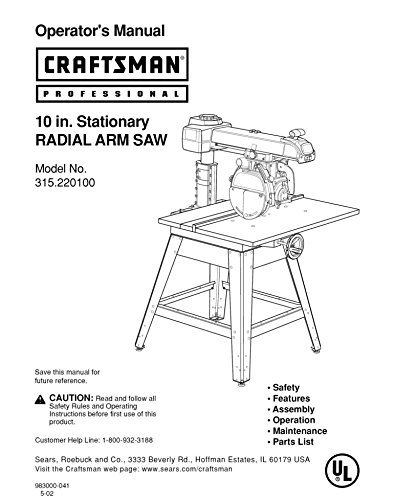
Figure 1.1 : Cover of the Craftsman 315.220100 Radial Arm Saw Instruction Manual Reprint. This image displays the front cover of the physical instruction manual reprint, which contains important information regarding the saw's operation and maintenance.
2. Consignes de sécurité
Always follow basic safety precautions to reduce the risk of fire, electric shock, and personal injury when operating power tools. This section outlines critical safety guidelines specific to radial arm saws.
- Lire le manuel : Understand all instructions and warnings before operating the saw.
- Portez une protection pour les yeux : Always wear safety goggles or a face shield.
- Utilisez une protection auditive : Une exposition prolongée au bruit peut endommager l'ouïe.
- Gardez les gardes en place : Never operate the saw without all guards properly installed.
- Maintenir une zone de travail propre : Les zones encombrées invitent aux accidents.
- Ne dépassez pas : Maintenez une bonne assise et un bon équilibre à tout moment.
- Sécuriser la pièce à travailler : Toujours clamp or hold the workpiece firmly against the fence.
- Évitez les pots-de-vin : Ensure the blade is sharp and the workpiece is properly supported.
- Débrancher l'alimentation : Débranchez toujours la scie avant d'effectuer des réglages, de changer les lames ou de procéder à l'entretien.
3. Installation
Proper setup is crucial for safe and accurate operation of your radial arm saw.
3.1 Déballage et inspection
- Retirez soigneusement tous les composants de l'emballage.
- Vérifiez que le colis n'a pas été endommagé pendant le transport. Si vous constatez des dommages, contactez immédiatement votre revendeur.
- Vérifiez que toutes les pièces mentionnées dans la liste de colisage sont présentes.
3.2 Montage de la scie
Mount the radial arm saw securely to a sturdy workbench or stand using appropriate hardware. Ensure the mounting surface is level and capable of supporting the saw's weight and operational forces.
3.3 Installation de la lame
- Débranchez la scie de la source d'alimentation.
- Raise the saw arm and lock it in the up position.
- Retirez le protège-lame.
- Use the provided wrench to loosen the arbor nut and remove the old blade (if applicable).
- Installez la nouvelle lame en veillant à ce que les dents soient orientées dans le bon sens de coupe.
- Serrez fermement l'écrou de l'arbre.
- Reinstall the blade guard.
4. Mode d'emploi
Familiarize yourself with the controls and functions before beginning any cutting operations.
4.1 Mise sous/hors tension
- To turn on, press the green 'ON' button.
- To turn off, press the red 'OFF' button.
4.2 Basic Crosscutting
- Position the workpiece firmly against the fence.
- Adjust the saw arm to the desired cutting position.
- Allumez la scie et laissez la lame atteindre sa pleine vitesse.
- Slowly pull the saw carriage forward through the workpiece.
- Once the cut is complete, push the saw carriage back to its resting position.
- Éteignez la scie.
4.3 Angle and Bevel Adjustments
The radial arm saw allows for various angle and bevel cuts. Refer to the specific adjustment knobs and levers on your saw for precise settings. Always ensure adjustments are locked securely before operating.
5. Entretien
Regular maintenance ensures the longevity and safe operation of your radial arm saw.
5.1 Nettoyage
- Débranchez l’alimentation avant le nettoyage.
- Remove sawdust and debris from the motor vents, table, and arm assembly using a brush or vacuum.
- Clean the saw blade regularly to remove pitch and resin buildup.
5.2 Lubrification
Apply a light coat of machine oil to moving parts, such as the carriage bearings and arm pivot points, as recommended in the original manufacturer's guidelines (typically every 6 months or as needed).
5.3 Blade Sharpening/Replacement
A dull blade can cause kickback and poor cuts. Sharpen or replace the blade when it becomes dull or damaged. Always use blades appropriate for your saw's specifications.
6. Dépannage
This section addresses common issues you might encounter with your radial arm saw.
| Problème | Cause possible | Solution |
|---|---|---|
| La scie ne démarre pas | Pas de courant ; disjoncteur déclenché ; interrupteur défectueux | Check power connection; reset breaker; contact service |
| Qualité de coupe médiocre (rugueuse, avec des éclats) | Dull blade; incorrect blade type; improper feed rate | Sharpen/replace blade; use appropriate blade; adjust feed rate |
| Vibrations excessives | Loose mounting; unbalanced blade; worn bearings | Tighten mounting bolts; replace blade; inspect bearings |
| La scie se bloque ou rebondit | Dull blade; improper workpiece support; forcing cut | Sharpen/replace blade; ensure proper support; reduce feed pressure |
7. Spécifications
The following are general specifications for the Craftsman 315.220100 Radial Arm Saw. Actual specifications may vary slightly based on manufacturing revisions.
- Modèle: 315.220100
- Moteur: Universal, 120V AC, 60 Hz (typical)
- Diamètre de la lame : 10 inches (typical)
- Taille de l'arbre: 5/8 inch (typical)
- Capacité de coupe transversale : Approximately 15-1/2 inches at 90 degrees (typical)
- Rip Capacity: Approximately 24 inches (typical)
- Poids: Approximately 150-200 lbs (typical, varies by model year)
8. Garantie et assistance
For specific warranty information, please refer to the original purchase documentation or contact Craftsman customer service. Typically, Craftsman power tools come with a limited warranty covering defects in materials and workmanship.
For technical support, replacement parts, or service inquiries, please visit the official Craftsman website or contact their customer service department. When contacting support, have your model number (315.220100) and serial number ready.
Artisan Officiel Website: www.artisan.com


