1. Introduction
This manual provides essential information for the safe and efficient operation of your Cotek SP-3000-112 High Frequency Pure Sine Wave Inverter. This device converts 12V DC power from batteries into 120V AC power, suitable for a wide range of electronic appliances. Please read this manual thoroughly before installation and use, and retain it for future reference.
2. Consignes de sécurité
Failure to follow these safety instructions may result in electric shock, fire, serious injury, or death. Always exercise caution when working with electrical equipment.
- Lisez toutes les instructions: Before operating the inverter, read all instructions and cautionary markings on the inverter, the batteries, and all appropriate sections of this manual.
- Personnel qualifié: Installation and servicing should be performed by qualified personnel familiar with batteries and inverters.
- Ventilation: Ensure adequate ventilation around the inverter. Do not install in a zero-clearance compartment.
- Évitez l'eau : Do not expose the inverter to rain, snow, spray, or bilge water.
- Mise à la terre appropriée : L'onduleur doit être correctement mis à la terre.
- Sécurité des batteries : Work near lead-acid batteries is dangerous. Batteries generate explosive gases during normal operation. Ensure proper ventilation and wear appropriate personal protective equipment.
- Débrancher l'alimentation : Always disconnect the battery supply before performing any maintenance or troubleshooting.
- Volume correcttage: Assurez-vous que le volume d'entrée CCtage matches the inverter's specifications (12VDC for this model).


3. Produit terminéview
3.1 Principales caractéristiques
- Sortie sinusoïdale pure pour les appareils électroniques sensibles.
- Fonction de commande à distance marche/arrêt (borne verte).
- Entrée et sortie entièrement isolées pour une sécurité accrue.
- Ventilateur de refroidissement à température et charge contrôlées pour des performances optimales.
- Interface conviviale avec indicateurs d'état LED tricolores.
- Multiple protection features: Reverse Polarity (Fuse), Under Voltage / Survoltage, Output Protection (Short Circuit / Overload / Over Temperature).
- E-13 / UL / CE / FCC approved.
3.2 Composants de l'onduleur

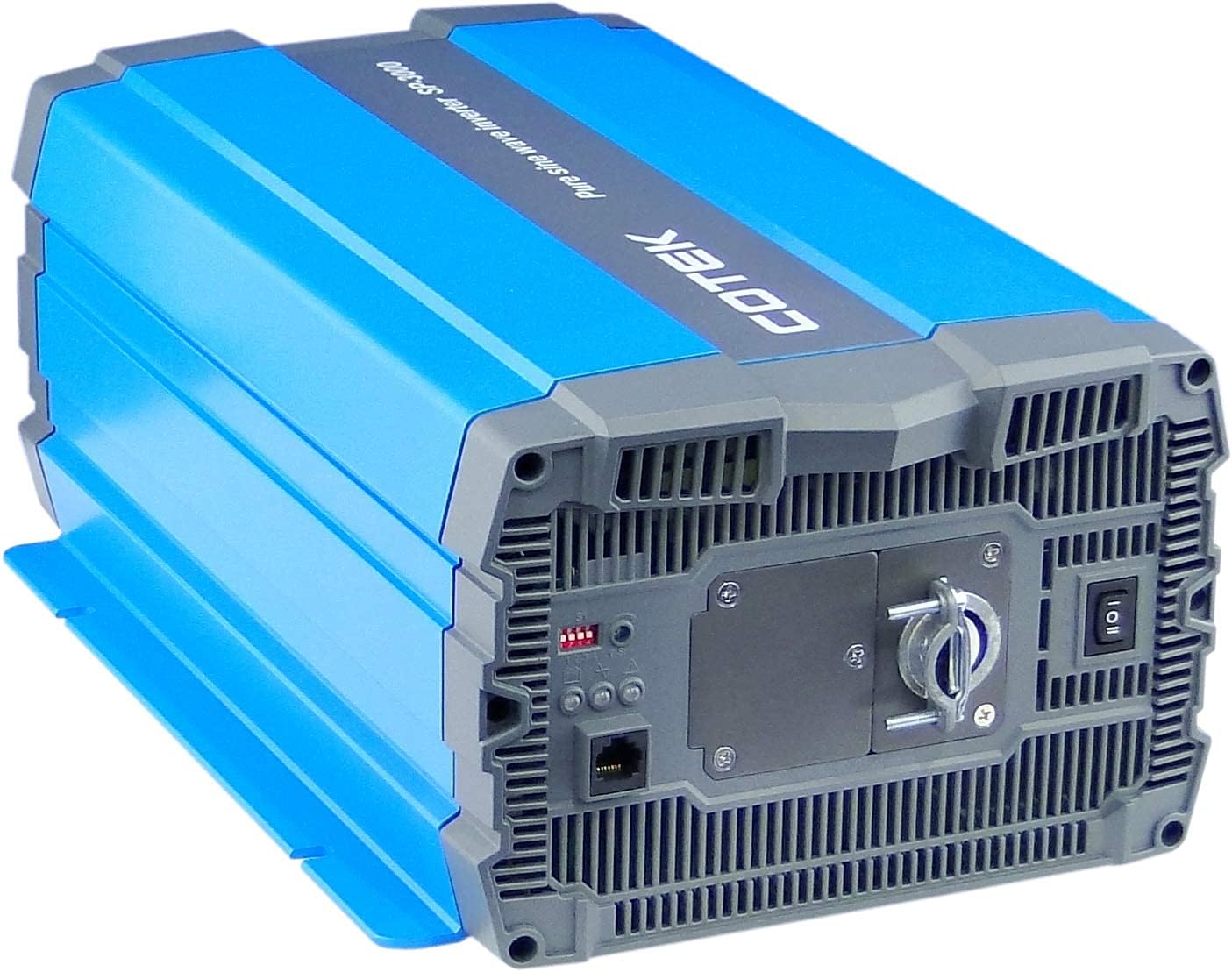
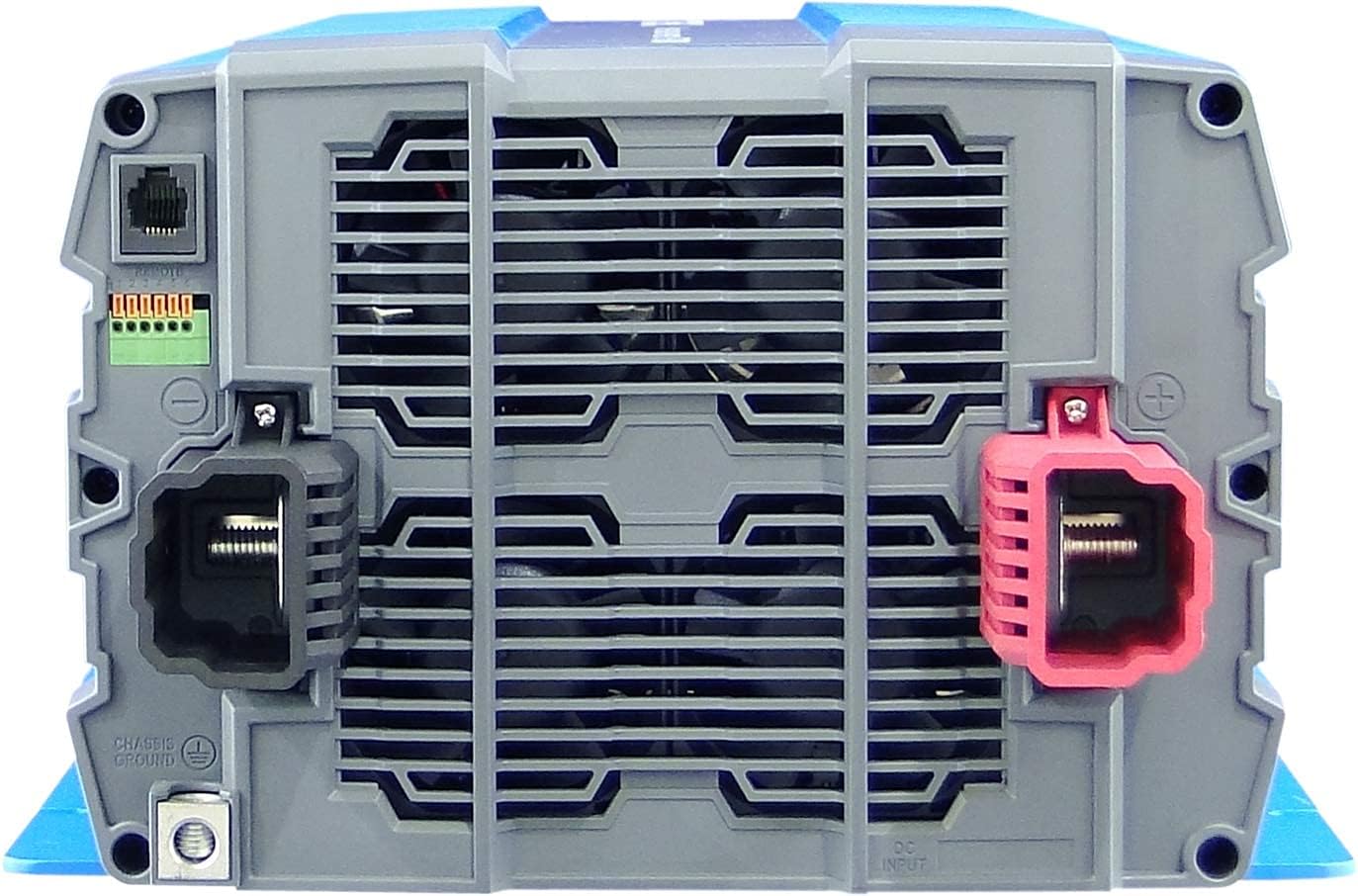
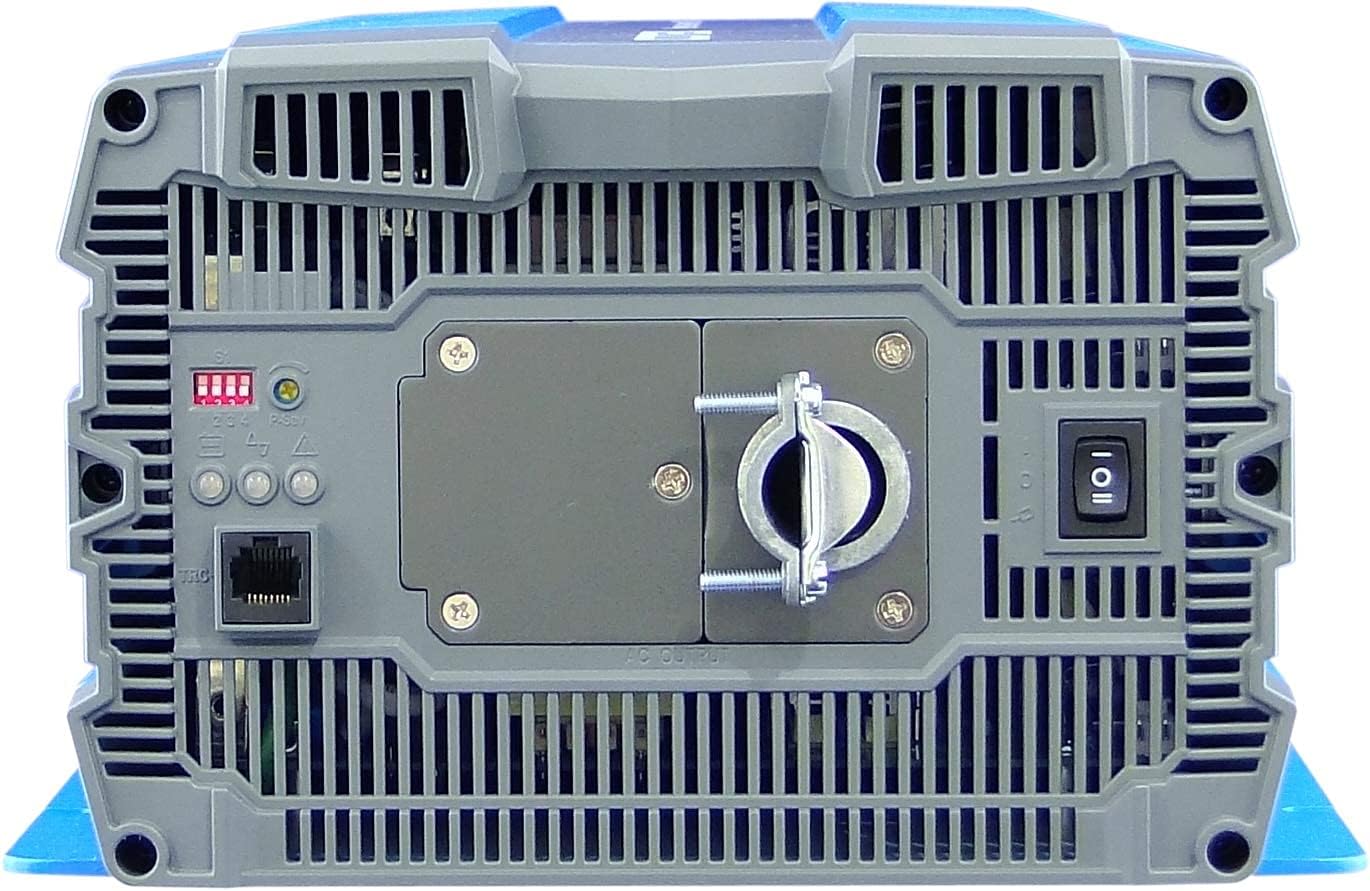
4. Configuration et installation
Proper installation is crucial for the safe and efficient operation of your inverter. Refer to local electrical codes and standards.
4.1 Placement
- Installez l'onduleur dans un endroit sec et bien ventilé, à l'abri de la lumière directe du soleil, des sources de chaleur et des matériaux inflammables.
- Ensure sufficient clearance around the inverter for proper airflow, especially around the cooling fan vents.
- Mount the inverter securely on a stable, non-combustible surface.
- Avoid areas where dust, moisture, or corrosive fumes are present.
4.2 Câblage
All wiring must comply with applicable electrical codes and be performed by a qualified electrician.
- Mise à la terre : Connect the inverter's chassis ground terminal to a reliable earth ground using appropriate gauge wire.
- Connexion d'entrée CC :
- Assurez-vous que le volume de la batterietage est 12VDC.
- Use appropriately sized cables for the DC input to minimize voltage drop and ensure safety. Refer to cable sizing charts based on current and distance.
- Connect the positive (+) terminal of the battery bank to the red (+) terminal on the inverter.
- Connect the negative (-) terminal of the battery bank to the black (-) terminal on the inverter.
- Install a DC-rated fuse or circuit breaker between the battery bank and the inverter's positive terminal, as close to the battery as possible.
- Connexion de sortie CA :
- Connect your AC loads to the hardwire AC output terminal block.
- Ensure the total load does not exceed the inverter's continuous power rating (3000W).
- Télécommande (facultatif) : Connect the remote control unit to the RJ45 port or use the green terminal for external ON/OFF control if desired.
5. Mode d'emploi
5.1 Mise sous/hors tension
- Pour allumer : Ensure all DC and AC connections are secure. Flip the main power switch on the inverter's rear panel to the 'ON' position. The Power LED indicator should illuminate.
- Pour éteindre : Disconnect all AC loads from the inverter. Flip the main power switch to the 'OFF' position.
5.2 Indicateurs LED
The inverter features 3-color LED status indicators on the control panel (refer to Figure 4) to provide operational feedback:
- LED verte: Indicates normal operation and power output.
- LED jaune: Indicates a warning condition, such as low battery voltage or high temperature. The inverter may continue to operate but requires attention.
- LED rouge: Indicates a fault condition, such as overload, short circuit, or severe over/under voltage. The inverter will shut down to protect itself and connected devices.
5.3 Paramètres du commutateur DIP
The DIP switches on the control panel allow for customization of certain inverter parameters, such as output voltage, frequency, and power saving mode. Refer to the detailed specifications table (Figure 5) or the product datasheet for specific configurations. Always adjust DIP switches when the inverter is powered off.
6. Entretien
Un entretien régulier garantit la longévité et le fonctionnement fiable de votre onduleur.
- Nettoyage: Nettoyez régulièrement l'extérieur de l'onduleur avec un chiffon sec. Assurez-vous que les ouvertures de ventilation sont exemptes de poussière et de débris. N'utilisez pas de nettoyants liquides.
- Relations: Regularly check all electrical connections (DC input, AC output, ground) for tightness and corrosion. Loose connections can cause overheating and poor performance.
- Inspection de la batterie : Inspect batteries for signs of damage, corrosion, or electrolyte leakage. Ensure battery terminals are clean and tight.
- Environnement: Vérifiez que l'environnement d'exploitation reste dans les plages de température et d'humidité spécifiées.
7. Dépannage
Cette section propose des solutions aux problèmes courants que vous pourriez rencontrer. Si le problème persiste, contactez le service client.
| Problème | Cause possible | Solution |
|---|---|---|
| L'onduleur ne s'allume pas. | No DC input power; Loose battery connections; Blown DC fuse/breaker; Inverter switch OFF. | Vérifiez le volume de la batterietage; Tighten connections; Replace fuse/reset breaker; Turn inverter switch ON. |
| Pas de sortie CA. | Overload; Short circuit; Over-temperature shutdown; Low/High DC input voltage. | Reduce AC load; Check for short circuits in wiring/appliances; Allow inverter to cool; Check battery voltage. |
| Yellow LED illuminated. | Niveau de batterie faibletage warning; High temperature warning. | Recharge batteries; Ensure adequate ventilation, reduce load. |
| Red LED illuminated / Inverter shut down. | Overload; Short circuit; Over-temperature; Under/Over voltage. | Identify and correct the fault (e.g., reduce load, fix short, allow cooling, check battery voltage), then restart the inverter. |
| Le ventilateur de refroidissement fonctionne en continu ou bruyamment. | Température interne élevée due à une charge importante ou à une mauvaise ventilation. | Reduce load; Improve ventilation around the inverter. |
8. Spécifications
The following table outlines the technical specifications for the Cotek SP-3000 Series Pure Sine Wave Inverter, specifically for the SP-3000-112 model.

| Catégorie | Paramètre | SP-3000-112 |
|---|---|---|
| Sortir | Vol ACtage | 100 / 110 / 115 / 120 VCA ±5 % |
| Puissance nominale | 3000 W | |
| Puissance de surtension (1 sec.) | 6000 W | |
| Puissance de sortie maximale (1 min) | 3450 W | |
| Forme d'onde de sortie | Onde sinusoïdale pure (THD < 3 %) | |
| Fréquence | 50 / 60Hz ±0.5% | |
| Saisir | Vol CCtage | 12 V CC |
| Voltaget gamme | 10.5 ~ 16.5VDC | |
| Courant à vide | <3.0A à 12V CC | |
| Mode d'économie d'énergie | <0.4A à 12V CC | |
| Efficacité (Max.) | 90% | |
| Protection | Input Under - Voltaget protection | 10.5 ±0.3 VCC |
| Input Under - Voltage Alarme | 11.0 ±0.3 VCC | |
| Input Under - Voltage Récupération | 12.0 ±0.3 VCC | |
| Input Over - Voltaget protection | 16.5 ±0.3 VCC | |
| Input Over - Voltage Récupération | 14.5 ±0.3 VCC | |
| Surcharge de sortie | Volume de sortie d'arrêttage, redémarrez pour récupérer | |
| Sortie courte | Volume de sortie d'arrêttage, redémarrez pour récupérer | |
| Environnement | Température de fonctionnement | -20°C ~ +40°C |
| Temp. de stockage & Humidité | -30°C ~ +70°C, 10 ~ 95% RH | |
| Général | Dimensions (L x H x P) | 442 x 214 x 102 mm (17.4 x 8.4 x 4.0 pouces) |
| Poids | 8.2 kg (18.1 XNUMX lb) | |
| Refroidissement | Ventilateur de refroidissement à température et charge contrôlées |

9. Garantie et assistance
9.1 Informations sur la garantie
The Cotek SP-3000-112 Pure Sine Wave Inverter comes with a Garantie fabricant d'un anCette garantie couvre les défauts de matériaux et de fabrication dans des conditions normales d'utilisation. Veuillez conserver votre preuve d'achat pour toute réclamation au titre de la garantie.
9.2 Assistance clientèle
For technical assistance, troubleshooting beyond this manual, or warranty inquiries, please contact Cotek customer support through their official website or your point of purchase. Provide your model number (SP-3000-112) and a detailed description of the issue to expedite service.


