Introduction
The Comet GP-6 is a high-performance dual-band vertical antenna designed for amateur radio base stations. It operates on the 2-meter (144 MHz) and 70-centimeter (440 MHz) bands, providing reliable communication for both simplex and repeater operations. Constructed with a durable fiberglass radome and aluminum alloy hardware, the GP-6 is built to withstand various environmental conditions, ensuring long-term performance.
This manual provides essential information for the safe and effective installation, operation, and maintenance of your Comet GP-6 antenna.
Consignes de sécurité
Always prioritize safety during installation and operation. Failure to follow safety guidelines can result in injury or equipment damage.
- Les lignes électriques: Never install the antenna near overhead power lines. Maintain a safe distance from all electrical wires.
- Conditions météorologiques : Avoid installation during lightning storms, strong winds, or other adverse weather conditions.
- Montage stable : Ensure the antenna is securely mounted to a sturdy mast or structure capable of supporting its weight and wind load.
- Mise à la terre : Proper grounding of the antenna and mast is crucial for lightning protection and safe operation. Consult local electrical codes for grounding requirements.
- Outils: Use appropriate tools and wear protective gear, including gloves and eye protection, during installation.
Contenu du colis
Vérifiez que tous les composants sont présents avant de commencer l'installation :
- Comet GP-6 Dual-Band Vertical Antenna (two-piece fiberglass radome)
- Mounting hardware (clamp-sur type)
- Instructions de montage (ce manuel)
Remarque : le câble coaxial et le mât ne sont pas inclus et doivent être achetés séparément.
Configuration et installation
Follow these steps for proper assembly and installation of your GP-6 antenna.
1. Assemblage de l'antenne
- Déballez soigneusement tous les composants et vérifiez qu'ils ne sont pas endommagés.
- Connect the two sections of the fiberglass radome. Ensure they are securely joined according to the markings or design. The antenna is pre-tuned and does not require further adjustments.
2. Emplacement de montage
Select a mounting location that is as high as possible and clear of obstructions (buildings, trees, metal structures) to ensure optimal performance. Consider accessibility for future maintenance.
3. Mast Installation
Le cl inclusamp-on mounting hardware is compatible with mast diameters ranging from 1.25 to 2.5 inches. Ensure the mast is robust enough to support the antenna, especially in high wind conditions (up to 112 MPH).
- Attach the mounting brackets to the antenna base.
- Securely fasten the antenna to the mast using the provided clamps and hardware. Tighten all bolts firmly to prevent rotation or slippage.
4. Coaxial Cable Connection
The GP-6 features an SO-239 connector. Use a high-quality 50-ohm coaxial cable (e.g., LMR-400 for longer runs) with a PL-259 connector to connect the antenna to your transceiver.
- Connect the PL-259 connector of your coaxial cable to the SO-239 connector on the antenna.
- Apply weatherproofing (e.g., self-amalgamating tape, silicone sealant) to the connection point to prevent moisture ingress. The recessed design of the connector helps minimize water entry.
- Route the coaxial cable neatly and secure it to the mast at regular intervals to prevent strain and movement.
5. Mise à la terre
Proper grounding is essential. Connect the antenna mast to an earth ground using heavy gauge wire and appropriate grounding rods. Consult local regulations for specific grounding requirements.
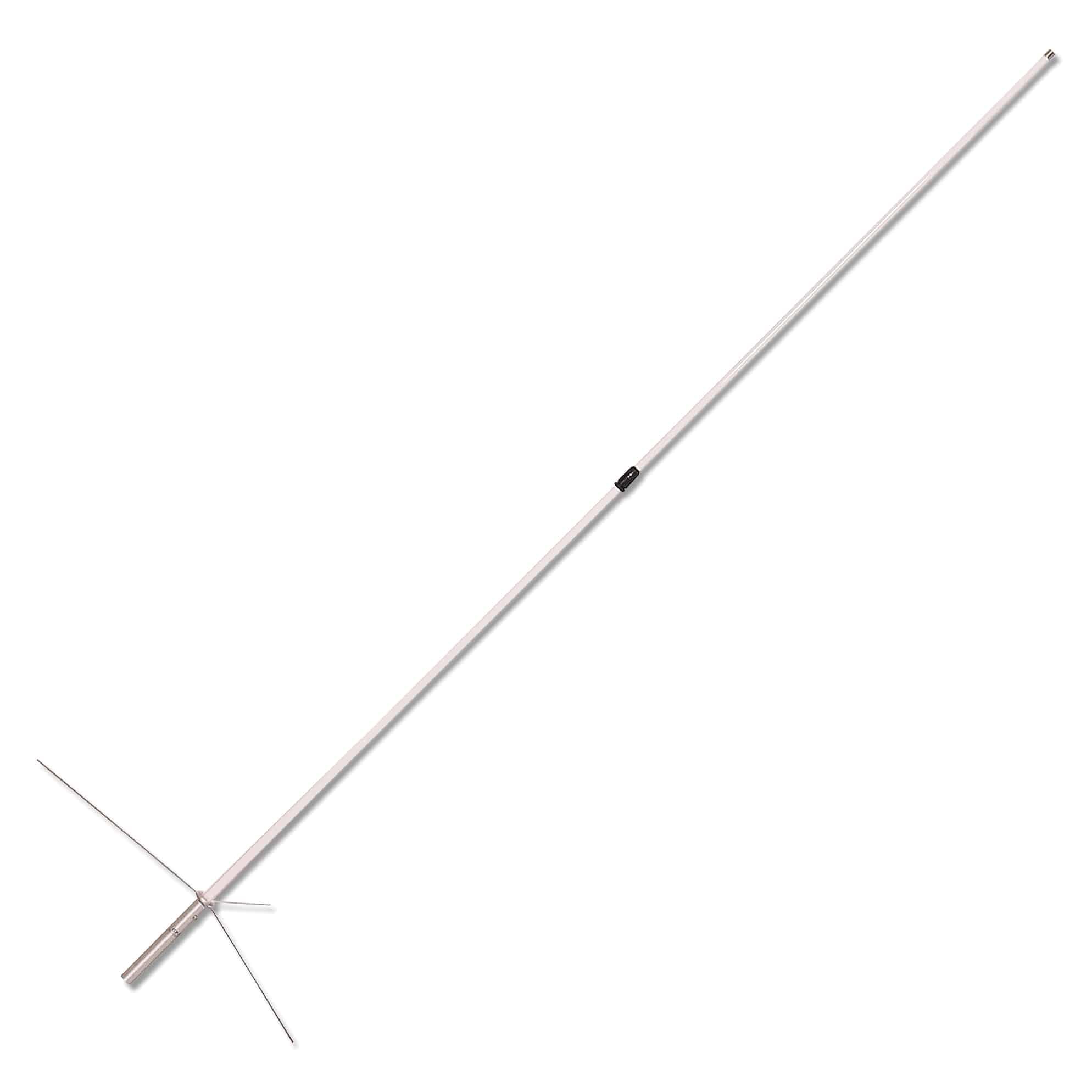
Image: The Comet GP-6 Dual-Band Base Antenna, showing its white fiberglass radome and mounting point. This image illustrates the antenna's overall appearance and how it might look when installed on a mast.
Mode d'emploi
The Comet GP-6 is designed for straightforward operation once properly installed.
- Bandes de fréquence: The antenna operates on 2 meters (144-148 MHz) and 70 centimeters (440-450 MHz).
- Puissance admissible : The GP-6 can handle up to 200 watts SSB and 100 watts FM. Ensure your transceiver's output power does not exceed these limits.
- Vérification du TOS : Before transmitting, always check the Standing Wave Ratio (SWR) using an SWR meter. The GP-6 is pre-tuned for low SWR across its operating bands. An SWR of 1.5:1 or lower is generally acceptable. High SWR can indicate an installation issue or damage and may harm your radio.
- Motif omnidirectionnel : The antenna provides a 360-degree omnidirectional radiation pattern, suitable for general coverage in all directions.
Entretien
The Comet GP-6 is built for durability and requires minimal maintenance.
- Inspection périodique: Annually inspect the antenna, mast, mounting hardware, and coaxial cable for any signs of wear, corrosion, or damage. Check for loose connections.
- Résistance aux intempéries: Re-apply weatherproofing to the coaxial connector as needed, especially after severe weather.
- Nettoyage: The fiberglass radome can be cleaned with a mild soap and water solution if it becomes dirty. Avoid abrasive cleaners.
- Storm Preparation: In areas prone to severe weather, consider temporarily lowering the antenna if possible, or ensure all mounting hardware is exceptionally secure.
Dépannage
If you experience issues with your GP-6 antenna, consider the following common troubleshooting steps:
| Problème | Cause possible | Solution |
|---|---|---|
| ROS élevé |
|
|
| Mauvaise réception/transmission du signal |
|
|
If problems persist, contact Comet customer support or a qualified amateur radio technician.
Caractéristiques
| Fonctionnalité | Spécification |
|---|---|
| Numéro de modèle | GP-6 |
| Bandes de fréquences | 2M (144-148 MHz), 70cm (440-450 MHz) |
| Gain (VHF) | 6.5 dBi |
| Gain (UHF) | 9.0 dBi |
| Puissance maximale (SSB) | 200 watts |
| Puissance maximale (FM) | 100 watts |
| Impédance | 50 Ohms |
| Type de connecteur | SO-239 |
| Construction | Two-piece, UV-stabilized fiberglass radome |
| Résistance au vent | Jusqu'à 112 MPH |
| Compatibilité du diamètre du mât | 1.25 à 2.5 pouces |
| Dimensions du produit | 66 x 6 x 2 pouces (environ) |
| Poids de l'article | 3.4 livres |
Informations sur la garantie
Comet products are manufactured to high standards. This product is covered by a manufacturer's warranty against defects in materials and workmanship. The specific terms and duration of the warranty may vary by region. Please retain your proof of purchase for warranty claims.
For detailed warranty information, refer to the official Comet website ou contactez votre revendeur local.
Soutien
For technical assistance, installation questions, or further information regarding your Comet GP-6 antenna, please contact Comet customer support. Contact details can typically be found on the official Comet websur le site ou auprès de votre revendeur agréé.
When contacting support, please have your product model number (GP-6) and proof of purchase available.


